Organic vs Paid Marketing: What Really Drives Growth?
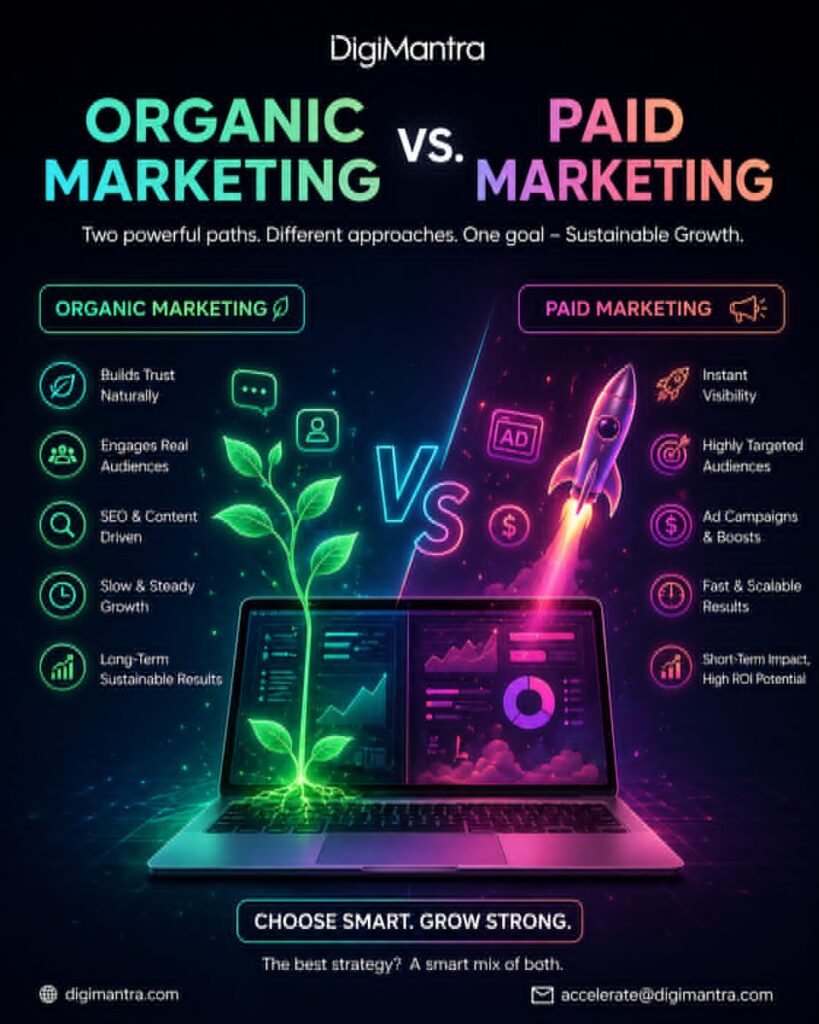
Digital marketing offers businesses different ways to reach customers online, but the two most common strategies are organic marketing and paid marketing. Both methods help businesses grow, improve visibility, and attract customers, but they work in different ways. Understanding the strengths of each strategy helps businesses choose the right marketing approach for long-term success.
Organic marketing focuses on growing naturally without paying directly for promotions. It helps businesses build trust, improve online presence, and create lasting customer relationships. Paid marketing uses advertisements to reach audiences quickly and generate faster results.
What is Organic Marketing?
Organic marketing is the process of attracting customers naturally through valuable content and online engagement instead of paid advertisements.
Organic marketing includes:
- Search Engine Optimization (SEO)
- Blog writing
- Social media content
- Email marketing
- Video content
- Audience engagement
Benefits of organic marketing:
- Builds long-term customer trust
- Improves search engine visibility
- Creates sustainable business growth
- Strengthens brand reputation
- Generates consistent website traffic
Challenges of organic marketing:
- Takes time to show results
- Requires regular content creation
- Needs consistent effort and strategy
What is Paid Marketing?
Paid marketing uses online advertising platforms to promote products or services directly to targeted audiences.
Paid marketing includes:
- Google Ads
- Facebook Ads
- Instagram promotions
- YouTube advertising
- Sponsored campaigns
Benefits of paid marketing:
- Faster online visibility
- Quick lead generation
- Better audience targeting
- Immediate traffic and engagement
- Easy performance tracking
Challenges of paid marketing:
- Requires advertising budget
- Results may stop when ads stop
- High competition can increase costs
Organic Marketing vs Paid Marketing
| Organic Marketing | Paid Marketing |
|---|---|
| Focuses on long-term growth | Focuses on quick results |
| Builds trust naturally | Provides instant visibility |
| Requires time and consistency | Requires advertising investment |
| Improves organic website traffic | Increases paid traffic quickly |
| Creates sustainable online presence | Helps during promotions and launches |
Which Strategy Drives More Growth?
The real growth comes from combining both strategies effectively. Organic marketing helps businesses build strong customer relationships and long-term credibility, while paid marketing helps brands reach larger audiences quickly.
A balanced strategy helps businesses:
- Build brand awareness
- Reach targeted customers
- Improve online engagement
- Increase sales opportunities
- Create long-term business growth
For example, businesses can use paid ads to attract new customers quickly while using SEO and content marketing to maintain audience trust and engagement over time.
Why Businesses Need Both
Using only one strategy may limit growth opportunities. Businesses that combine organic and paid marketing often achieve better results because they gain both immediate visibility and long-term stability.
Combined marketing advantages:
- Faster audience growth
- Better customer trust
- Stronger online presence
- Improved lead generation
- Higher brand recognition
- Sustainable business success
Conclusion
Organic and paid marketing are both important parts of digital growth. Organic marketing builds trust, authority, and long-term relationships, while paid marketing provides speed, visibility, and faster results.
Businesses that balance both strategies can create stronger digital marketing performance and achieve better long-term success. The key is understanding when to use each method and how to combine them effectively to support business growth in the digital world.